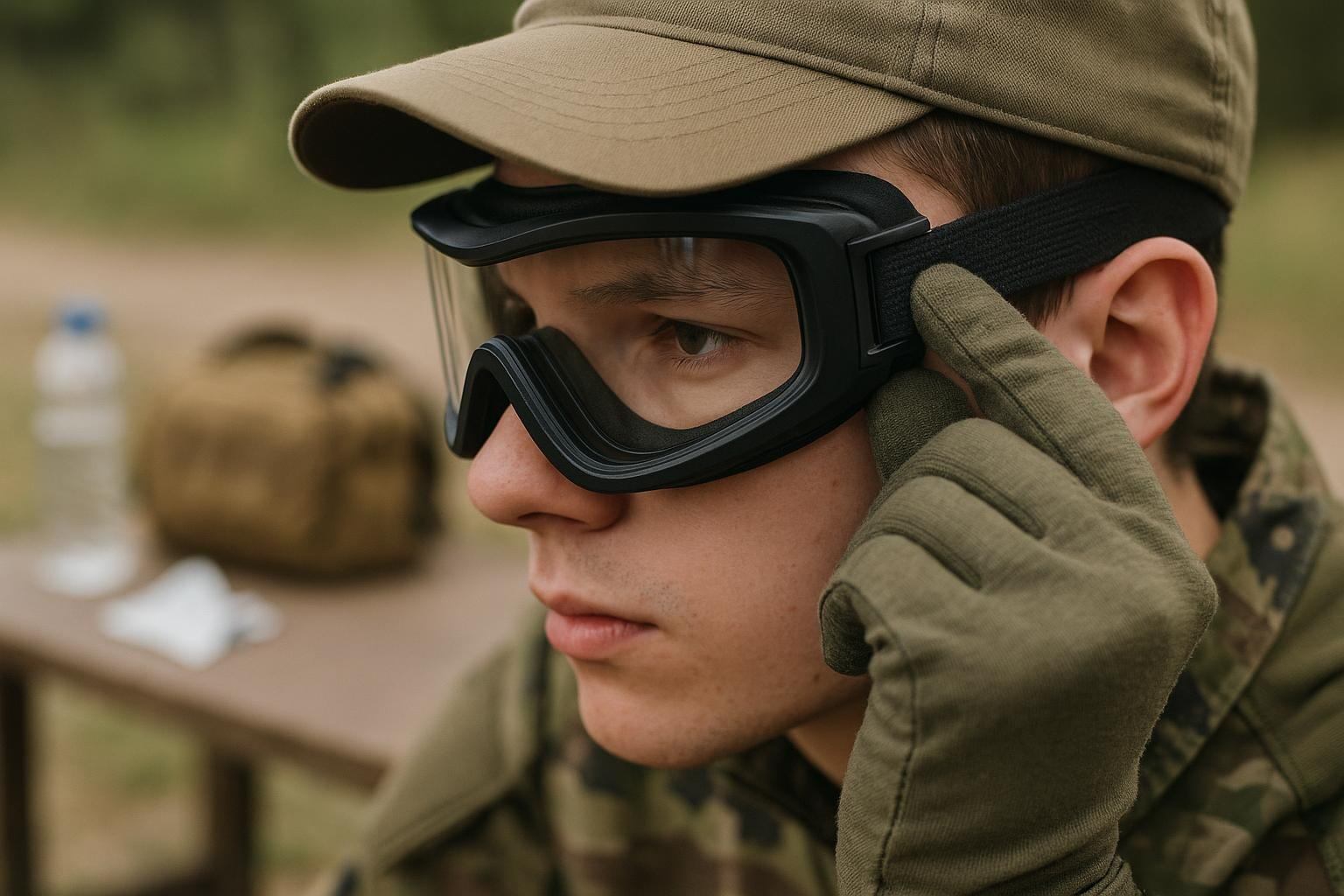
The overlooked preparation detail is how a mask or goggles fit after the rest of the kit is on. A loose strap, fogged lens or pressure point can distract you before the first game. New players benefit more from dependable basics than a long equipment list: clear vision, comfortable clothing, a tested replica, enough water and a willingness to follow the field's process. Good airsoft field gear should make safe decisions easier, not create another problem.
Start with vision, fit, and coverage
Eye protection is the first purchase decision, not an accessory to add later. Use protection the venue accepts and that is designed for impacts expected in airsoft or paintball. Ordinary workshop glasses, fashion eyewear and improvised combinations may leave gaps or fail to stay in place. Check the field's requirements before buying, since acceptable designs differ between venues.
Fit matters as much as the label. The seal or frame should remain stable when you look down, turn your head or shoulder a replica. Straps should hold it securely without painful pressure. If you need corrective lenses, check whether the model accommodates them or ask the venue about approved options. Never remove eye protection in a play area, even if the lens fogs or a strap shifts; leave the active area and follow the marshal's direction.
For paintball, full-face coverage is commonly part of the field's safety system. Airsoft venues may have different lower-face rules, but exposed teeth and skin can still be injured by close impacts. A comfortable lower-face solution is worth considering, especially for beginners.
Let the venue set the baseline
A reliable setup begins with the rules of the place where it will be used. Read the venue's current briefing or player information before arriving. Check requirements for eye and face protection, replica handling, safe zones, permitted ammunition, magazine changes, boundaries, surrender calls and hit procedures.
Rules are not interchangeable between sites. A replica, accessory or playing style accepted at one field may be restricted elsewhere, so ask before unpacking anything disputed. If local laws affect transport, storage, replicas or public use, verify current guidance from the relevant official authority; those requirements can change, and field staff cannot replace legal advice.
Keep transport separate from play. Use a case or other method requested by the venue, do not display or handle realistic-looking equipment casually in public, and keep the replica unloaded until instructed. Use only designated areas for testing or handling.
Choose fewer items that solve real problems
A beginner's equipment list does not need to look like a catalogue. Start with field-approved eye protection, sturdy footwear suited to the ground, clothing that allows movement, water, a way to carry essentials and enough approved ammunition for the session. Gloves and lower-face protection can improve comfort, but they should not interfere with trigger control, vision or communication.
Clean tread and secure laces matter more than aggressive-looking footwear. Clothing should tolerate kneeling, crawling and dirt without loose straps catching on branches or barriers. Follow the site's guidance on colors and camouflage.
Test the complete setup at home. Wear the eye and face protection, head covering, hearing protection if used, chest rig or bag, gloves and footwear. Check for blocked vision, pinched skin, loose straps and anything that makes shouldering or carrying awkward. Equipment that works separately can become uncomfortable when combined.
Make maintenance a short routine
Airsoft maintenance is less about complicated work than preventing small faults. Before a session, inspect the body, stock, grip, magazine release, battery connection and other accessible controls for looseness or damage. Check that magazines feed correctly and that the battery is the correct type. Do not use a swollen, damaged or overheated battery.
Clean the inner barrel only with the method recommended for the unloaded replica. Keep dirt away from the hop-up area, connectors and moving controls. After play, remove the battery, unload the replica and wipe away moisture or mud before storing it. Follow the manufacturer's lubrication instructions; excess oil can harm accuracy or contaminate ammunition.
Treat protective lenses with equal care. Use a clean, suitable cloth and product guidance rather than abrasive fabric or household chemicals. Replace scratched, cracked or badly clouded protection. A lens can remain intact yet still reduce your ability to see hazards, signals and other players.
Learn the field's signals before the first game
A briefing is practical information, not a formality. Know how to identify safe areas, when magazines must be removed, how a ceasefire is announced and where to go after being hit. Keep the replica pointed safely and your finger away from the trigger until permitted to engage within the game area.
Pay attention to marshals. They may pause play for a boundary issue, lost item, medical concern or protection problem. If you hear an unclear command, stop, keep your protection on and ask for clarification. Never resolve a disagreement by continuing to shoot or changing a safety rule to suit your equipment.
Sportsmanship keeps equipment useful
Airsoft sportsmanship is visible in small choices. Call your hits honestly, even when a shot is hard to feel through clothing or equipment. If uncertain, pause and ask rather than arguing across the field. Respect a player's call, follow the marshal's decision and return to the safe area as directed.
Avoid blind firing, unsafe shots and aggressive contact. Do not use a malfunction, rule gap or technical advantage to pressure another player beyond the site's limits. Paintball adds concerns involving paint marks, barrel devices and cleaning procedures, so use the field's method instead of debating at close range.
A simple checklist is enough before leaving home:
– Field-approved eye and face protection, fitted and clean
– Charged, undamaged battery and tested magazines
– Unloaded replica packed safely for transport
– Suitable footwear, clothing, water and gloves if needed
– Knowledge of the venue's safety briefing and hit-calling process
– Small cleaning supplies and a plan for post-game storage
Reliable field gear is not the largest loadout. It is equipment that fits, works within the rules and can be checked without drama. Keep the setup simple until you understand what the venue, weather and your comfort require. That leaves more attention for safe handling, fair play and enjoying the session.